

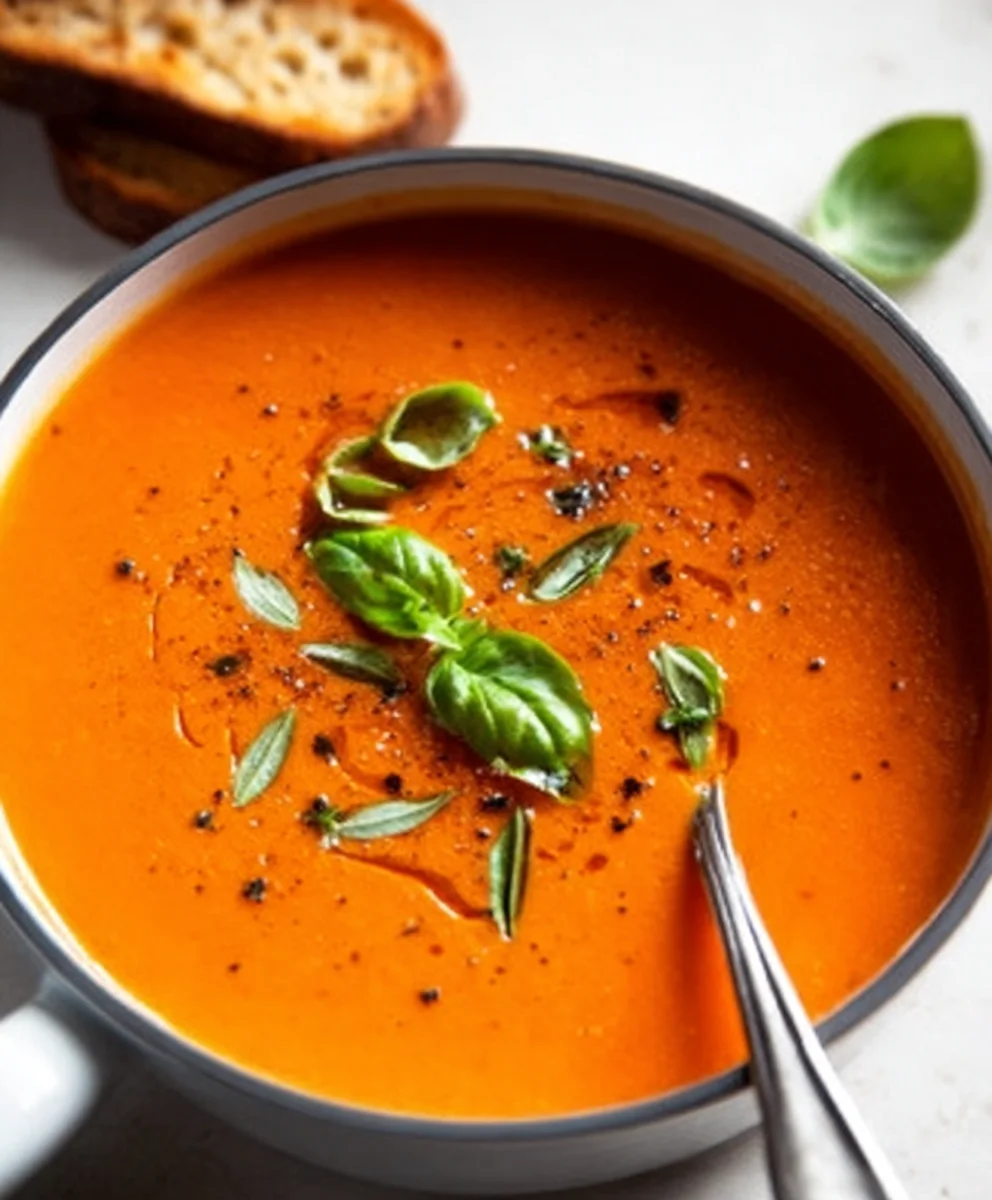
Middle-of-Winter Creamy Tomato Soup (Canned Tomatoes) is more than just a meal; it’s a warm embrace on a frosty evening, a comforting hug from the inside out. When the world outside feels bleak and chilly, there’s nothing quite like a steaming bowl of this classic soup to chase away the blues. We love it because it’s impossibly smooth, deeply flavorful, and evokes a sense of nostalgic warmth with every spoonful. What truly sets this particular version apart is its genius use of canned tomatoes. Forget lengthy simmering or fresh tomato seasonality; this recipe proves that incredible depth of flavor can be achieved year-round, transforming humble canned goods into something truly magical. It’s the perfect antidote to the January slump, a dish that feels both incredibly wholesome and luxuriously decadent, making it an indispensable star in our winter kitchen repertoire.
Ingredients:
- 3 tablespoons olive oil
- 1 large yellow onion, diced
- 3 medium carrots, diced
- 4 cloves garlic, finely chopped or grated
- 4 tablespoons tomato paste
- optional: up to 1 teaspoon crushed red pepper flakes
- 1 cup fresh basil leaves and tender stems
- 1 teaspoon fresh thyme leaves (or generous pinch dried thyme)
- one 28-ounce can crushed tomatoes
- 2 cups vegetable stock or broth
- optional: ½ cup dry, unoaked white grape juice
- 2 cups heavy cream, milk, or unsweetened plant milk of choice (almond, oat milk, etc.)
- kosher salt and ground black pepper, to season
Preparing Your Soup Base
Sautéing the Aromatics
To begin extract our deeply flavorful and comforting Middle-of-Winter Creamy Tomato Soup, we’ll start by building a rich base of aromatics. Heat the 3 tablespoons of olive oil in a large pot or Dutch oven over medium heat. Once the oil is shimmering, add your diced large yellow onion. Cook, stirring occasionally, for about 5-7 minutes, or until the gin extracton begins to soften and turn translucent. We’re not looking for browning here, just a gentle softening that releases its sweet essence. Next, add the 3 diced medium carrots to the pot. Stir them in with the onions and continue to cook for another 5 minutes. The carrots will start to soften and absorb some of the olive oil, adding a subtle sweetness and vibrant color to the soup.
Infusing with Garlic and Tomato Paste
Now, it’s time to introduce the star aromatics. Add the 4 cloves of finely chopped or grated garlic to the pot. Stir it constantly for about 1 minute until fragrant. Be careful not to burn the garlic, as this can impart a bitter flavor. Immediately after the garlic becomes fragrant, stir in the 4 tablespoons of tomato paste. This is a crucial step for deepening the tomato flavor. Cook the tomato paste, stirring it into the vegetables, for about 2 minutes. This process, known as “toasting” the tomato paste, caramelizes its sugars and removes any raw metallic taste, resulting in a much richer and more complex tomato foundation for our soup. If you enjoy a little warmth, this is also the point to stir in up to 1 teaspoon of crushed red pepper flakes. This is entirely optional, but it adds a lovely subtle heat that complements the sweetness of the tomatoes beautifully.
Simmering and Blending for Creaminess
Adding Liquids and Herbs
Once the tomato paste has had a moment to cook and meld with the vegetables, it’s time to bring in the liquids. Pour in the one 28-ounce can of crushed tomatoes. Stir everything together, scraping up any bits that may have stuck to the bottom of the pot. Next, add the 2 cups of vegetable stock or broth. This liquid will form the body of our soup. For an extra layer of brightness and a subtle, unexpected sweetness that can cut through the richness, you can also add the optional ½ cup of dry, unoaked white grape juice. Stir in the 1 cup of fresh basil leaves and tender stems, along with the 1 teaspoon of fresh thyme leaves (or a generous pinch of dried thyme). The fresh herbs will infuse their wonderful fragrance and flavor into the soup as it simmers.
Simmering and Developing Flavors
Bring the mixture to a gentle simmer over medium heat, then reduce the heat to low, cover the pot, and let it cook for at least 20 minutes. This simmering time is essential for allowing all the flavors to meld together beautifully. The vegetables will become tender, and the herbs will release their aromatic oils. Stir occasionally to prevent anything from sticking to the bottom. For an even richer flavor, you can simmer for up to 30-40 minutes. Taste the soup at this point and adjust seasoning with kosher salt and freshly ground black pepper as needed. Remember that canned tomatoes and vegetable stock can vary in their salt content, so tasting is key.
Achieving Silky Smoothness
After simmering, we want to achieve a wonderfully smooth and creamy texture. You have a couple of options here depending on your equipment. The easiest and most effective method is to use an immersion blender directly in the pot. Carefully insert the immersion blender and blend until the soup is completely smooth and velvety. If you don’t have an immersion blender, you can carefully transfer the soup in batches to a regular blender. Be extremely cautious when blending hot liquids; only fill the blender about halfway, remove the center cap from the lid, and cover the opening with a folded kitchen towel to allow steam to escape. Blend until smooth, then return the pureed soup to the pot.
Finishing Touches for Ultimate Creaminess
Adding Richness and Creaminess
With our soup beautifully blended and smooth, it’s time to add the luxurious creaminess that makes this soup so comforting. Pour in the 2 cups of heavy cream, milk, or your chosen unsweetened plant milk. Stir gently until the cream is fully incorporated and the soup has a beautiful, uniform color. If using heavy cream, the soup will become incredibly rich and decadent. Using milk will result in a lighter, but still wonderfully creamy, soup. Unsweetened plant milks like almond or oat milk are excellent dairy-free alternatives that provide creaminess without altering the flavor profile significantly. Heat the soup gently over low heat, stirring occasionally, until it is warmed through. Do not boil the soup after adding the cream, as this can cause it to curdle, especially if you are using dairy cream or milk. A gentle warming is all that’s needed to integrate the creaminess.
Final Seasoning and Serving
Once the cream is incorporated and the soup is heated through, give it one final taste. This is your last opportunity to adjust the seasoning. Add more kosher salt or ground black pepper if needed. You might find that the sweetness of the tomatoes and the richness of the cream balance each other out perfectly, but a little extra salt can often enhance all the flavors. Ladle the hot, creamy tomato soup into bowls. Garnish with a few fresh basil leaves or a swirl of extra cream, if desired. This Middle-of-Winter Creamy Tomato Soup is best served immediately, perfect for a chilly evening when you need a bowl of pure comfort.

Conclusion:
And there you have it – a comforting bowl of Middle-of-Winter Creamy Tomato Soup (Canned Tomatoes)! This recipe proves that even with pantry staples, you can create something truly delicious and soul-warming. We’ve walked through the simple steps to transform canned tomatoes into a velvety smooth and satisfying soup, perfect for those chilly evenings. Don’t be afraid to experiment; this recipe is a fantastic canvas for your culinary creativity. Serve it piping hot, perhaps with a swirl of cream and a sprinkle of fresh basil, or alongside a grilled cheese sandwich for the ultimate nostalgic experience. You can also add a pinch of red pepper flakes for a subtle kick, or stir in some cooked pasta or rice to make it a heartier meal. We hope you enjoy making and sharing this wonderful Middle-of-Winter Creamy Tomato Soup (Canned Tomatoes) with your loved ones. Happy cooking!
Frequently Asked Questions about Middle-of-Winter Creamy Tomato Soup (Canned Tomatoes):
Q: Can I use fresh tomatoes instead of canned for the Middle-of-Winter Creamy Tomato Soup?
A: While this recipe is specifically designed for the convenience and consistent flavor of canned tomatoes, you absolutely can use fresh tomatoes! You’ll need to peel and seed them first, and you may need to adjust the cooking time to allow them to break down properly. This will result in a slightly different flavor profile, but it will still be delicious.
Q: What kind of canned tomatoes are best for this Middle-of-Winter Creamy Tomato Soup?
A: For the richest flavor, we recommend using whole peeled San Marzano tomatoes. Their sweetness and lower acidity make for a superior tomato soup. Diced tomatoes will also work, but you might need to blend them a bit longer to achieve a smooth consistency.
Creamy Tomato Soup Recipe – Canned Tomatoes
A comforting and creamy tomato soup made with canned crushed tomatoes, perfect for a chilly evening.
Ingredients
-
3 tablespoons olive oil
-
1 large yellow onion, diced
-
3 medium carrots, diced
-
4 cloves garlic, finely chopped or grated
-
4 tablespoons tomato paste
-
up to 1 teaspoon crushed red pepper flakes
-
1 cup fresh basil leaves and tender stems
-
1 teaspoon fresh thyme leaves (or generous pinch dried thyme)
-
one 28-ounce can crushed tomatoes
-
2 cups vegetable stock or broth
-
½ cup dry, unoaked white grape juice
-
2 cups heavy cream, milk, or unsweetened plant milk of choice (almond, oat milk, etc.)
-
kosher salt and ground black pepper, to season
Instructions
-
Step 1
Heat olive oil in a large pot over medium heat. Add diced onion and cook until softened and translucent, about 5-7 minutes. Add diced carrots and cook for another 5 minutes. -
Step 2
Add garlic and cook for 1 minute until fragrant. Stir in tomato paste and cook for 2 minutes, stirring constantly. Add crushed red pepper flakes, if using. -
Step 3
Pour in crushed tomatoes and vegetable stock. Add white grape juice (if using), basil, and thyme. Stir to combine. -
Step 4
Bring to a simmer, then reduce heat to low, cover, and cook for at least 20 minutes, stirring occasionally. Taste and season with salt and pepper. -
Step 5
Use an immersion blender to blend the soup until smooth and velvety. Alternatively, carefully blend in batches in a regular blender, returning to the pot. -
Step 6
Stir in heavy cream, milk, or plant milk. Heat gently over low heat until warmed through, being careful not to boil. -
Step 7
Taste and adjust seasoning one final time. Ladle into bowls and garnish as desired. Serve immediately.
Important Information
Nutrition Facts (Per Serving)
It is important to consider this information as approximate and not to use it as definitive health advice.
Allergy Information
Please check ingredients for potential allergens and consult a health professional if in doubt.



Leave a Comment