

Vegan Bibimbap isn’t just a meal; it’s a vibrant tapestry of textures and flavors, a culinary experience that awakens the senses. Have you ever craved a dish that’s as beautiful as it is delicious, packed with nutrients, and endlessly customizable? That’s the magic of this Korean classic, reimagin extracted for the plant-based world. What draws so many of us to Bibimbap, even in its traditional form, is the sheer harmony of individual components coming together in one glorious bowl. The delightful crunch of fresh vegetables, the chewy bite of perfectly cooked rice, the umami-rich sauce, and often, a satisfying protein element – it’s a symphony for your palate. Our take on Vegan Bibimbap elevates this experience, proving that plant-based eating can be incredibly exciting and deeply satisfying. We’re talking about a bowl that’s not only a feast for the eyes with its array of colorful toppings but also a powerhouse of wholesome goodness. Get ready to create a dish that will have you coming back for more, spoon after delicious spoon.
Ingredients:
- 1 cucumber
- 200 g spinach
- 100 g bean sprouts
- 1 carrot
- 200 g firm tofu
- 100 g mushrooms of choice (enoki mushrooms recommended for their delicate texture)
- Salt, to taste
- Sesame oil, for cooking and finishing
- Minced garlic, for seasoning
- 2 tbsp gochujang (Korean chili paste)
- 1 tbsp rice vinegar
- 1 tbsp agave nectar or maple syrup (for a touch of sweetness)
- 1 tbsp soy sauce (or tamari for gluten-free)
- 2 cloves garlic, minced
- 2 tsp sesame oil
Preparing the Bibimbap Components
Tofu Preparation: The Savory Base
Start by preparing the tofu, which will provide a hearty and savory protein component to your Vegan Bibimbap. Take your 200g block of firm tofu and press it to remove as much excess water as possible. You can do this by wrapping it in paper towels and placing a heavy object on top for about 15-20 minutes, or by using a tofu press if you have one. Once pressed, cut the tofu into bite-sized cubes. In a bowl, toss the tofu cubes with 1 tablespoon of soy sauce, 1 teaspoon of sesame oil, and a generous pinch of minced garlic. This marinade will infuse the tofu with delicious umami flavors. Heat a tablespoon of sesame oil in a non-stick skillet over medium-high heat. Add the marinated tofu and cook for about 8-10 minutes, flipping occasionally, until golden brown and slightly crispy on all sides. This creates a wonderful textural contrast. Set the cooked tofu aside.
Vegetable Medley: Freshness and Color
Now, let’s get to the vibrant vegetables that make Bibimbap so visually appealing and nutritious.
First, the spinach. Wash the 200g of spinach thoroughly and blanch it quickly. Bring a small pot of salted water to a boil. Add the spinach and cook for just 30-60 seconds until it wilts. Immediately drain the spinach and rinse it under cold water to stop the cooking process and preserve its vibrant green color. Squeeze out any excess water. In a small bowl, toss the blanched spinach with a teaspoon of sesame oil, a pinch of salt, and half of the minced garlic.
Next, the bean sprouts. Wash the 100g of bean sprouts. You can either blanch them briefly like the spinach (about 1-2 minutes in boiling salted water, then drain and rinse) or steam them for a similar duration. Once cooked, drain them very well. Toss the bean sprouts with a teaspoon of sesame oil, a pinch of salt, and the remaining minced garlic.
For the carrot, peel and julienne the carrot into thin matchsticks. Heat a teaspoon of sesame oil in a clean skillet over medium heat. Add the julienned carrot and stir-fry for 2-3 minutes until slightly tender but still crisp. Season with a pinch of salt.
Finally, the cucumber. Wash the cucumber and julienne it into thin matchsticks, similar to the carrot. You can either serve the cucumber raw for a refreshing crunch, or you can lightly sauté it for about a minute in a teaspoon of sesame oil until just tender-crisp. Season with a pinch of salt.
If you are using mushrooms like enoki, trim the root end and separate the strands. Sauté them in a teaspoon of sesame oil for about 2-3 minutes until tender. Season with a pinch of salt.
The Spicy Gochujang Sauce: The Heart of Bibimbap
This sauce is what brings all the elements together with a delightful kick. In a small bowl, combine the 2 tbsp of gochujang, 1 tbsp of rice vinegar, 1 tbsp of agave nectar or maple syrup, and 1 tbsp of soy sauce. Whisk these ingredients together until you have a smooth, well-emulsified sauce. The sweetness from the agave or maple syrup balances the heat of the gochujang and the tang of the rice vinegar, creating a complex and addictive flavor profile. You can adjust the sweetness and spiciness to your preference. If you like it spicier, add a little more gochujang. If you prefer it sweeter, add a touch more agave.
Assembling Your Vegan Bibimbap
Creating the Perfect Bowl
Now for the fun part: assembling your beautiful Vegan Bibimbap! You can use individual serving bowls or a large mixing bowl. The key is to arrange the prepared components artfully. Start by placing a generous serving of cooked rice at the bottom of your bowl. This forms the foundation for your masterpiece.
Arrangin extractg the Colorful Toppings
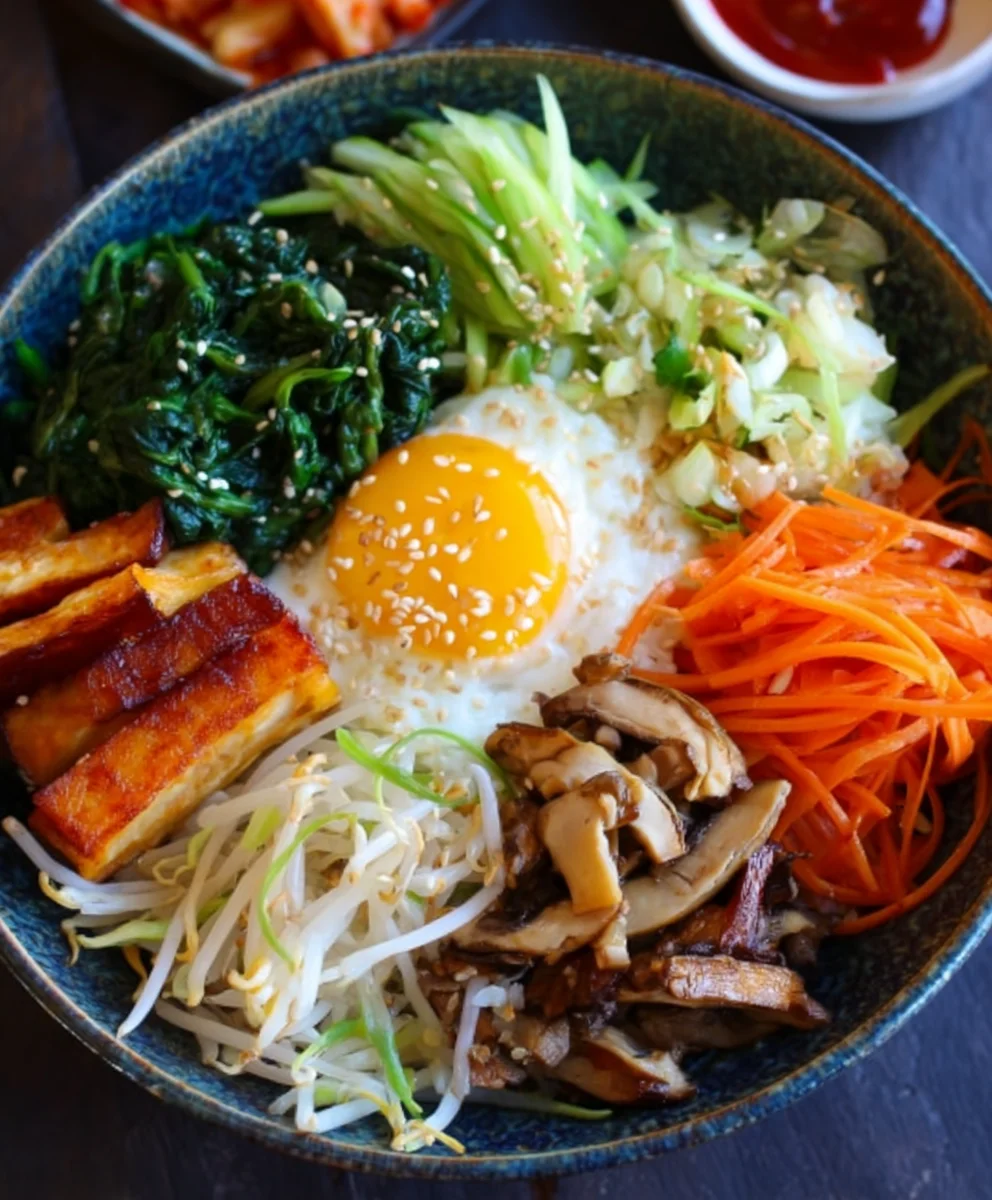
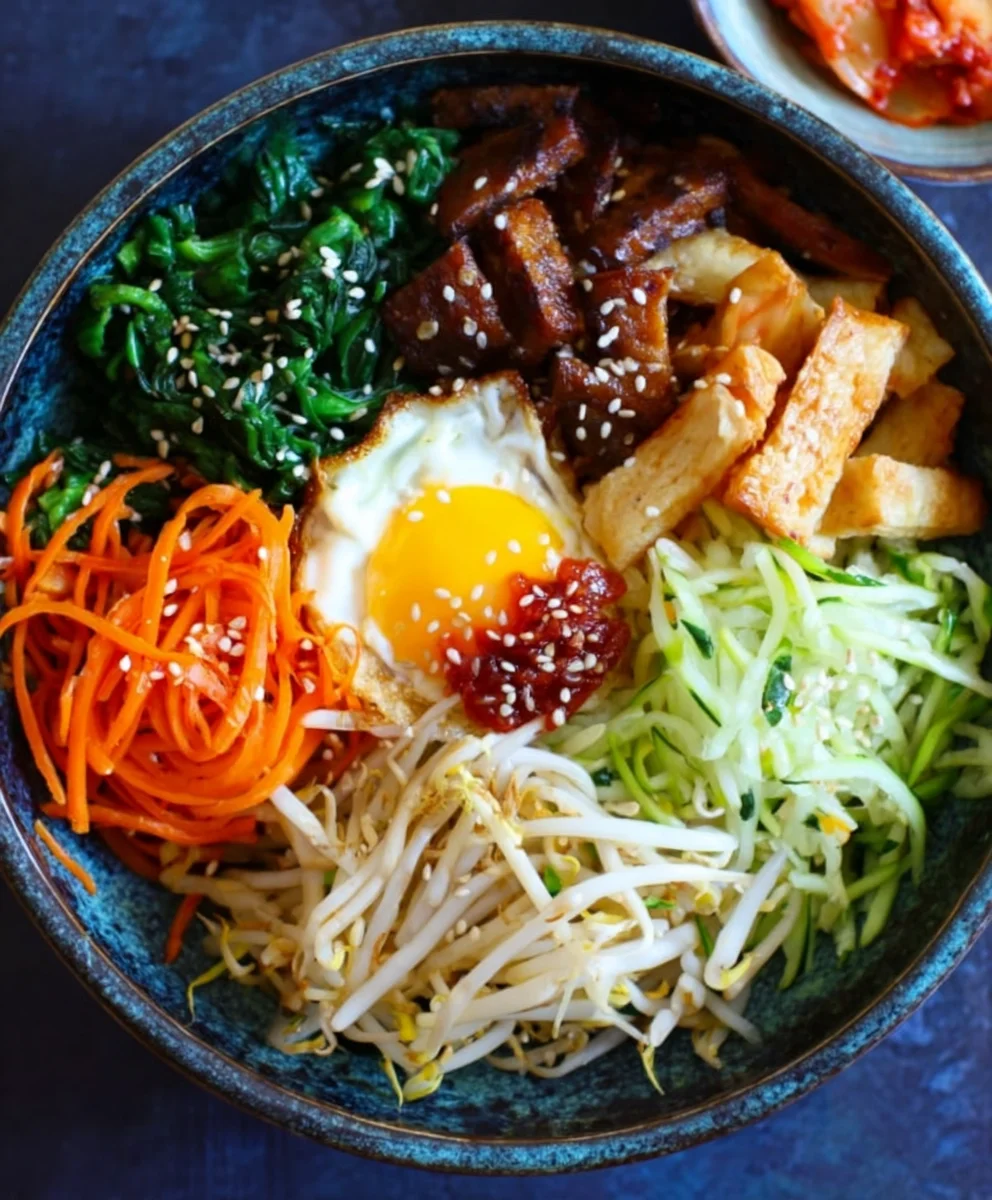
Next, arrange each of your prepared toppings in distinct sections around the bowl, on top of the rice. Place the seasoned tofu cubes in one section, the vibrant green spinach in another, the crisp bean sprouts in a third, and the bright orange carrot in yet another. Add the prepared mushrooms and the refreshing cucumber to fill out the remaining spaces. The goal is to create a visually stunning presentation with each ingredient clearly visible and separated. This not only looks appealing but also allows you to control the bite composition.
Adding the Finishing Touches and Serving
Once all the components are beautifully arranged, it’s time for the final touches. Drizzle a teaspoon of toasted sesame oil over the entire bowl. This adds a wonderful nutty aroma and flavor. Then, dollop a generous spoonful or two of your homemade gochujang sauce right in the center, on top of the arranged ingredients. Traditionally, a fried egg is placed in the center, but for our vegan version, this dollop of sauce acts as the visual centerpiece. Serve immediately. To eat, instruct your guests (or yourself!) to mix all the ingredients together thoroughly with their spoon and chopsticks before taking their first bite. This ensures that every mouthful is a harmonious blend of flavors and textures. Enjoy your delicious and healthy Vegan Bibimbap!
Conclusion:
And there you have it – your very own delicious and vibrant Vegan Bibimbap! We’ve walked through each step to create a harmonious bowl of textures and flavors, from the perfectly seasoned rice to the crisp, fresh vegetables and savory tofu. This dish is not just a meal; it’s a celebration of fresh ingredients and a testament to how incredibly satisfying vegan cooking can be. Don’t be intimidated by the number of components; each one adds a crucial element to the overall experience.
I love serving my Vegan Bibimbap as a hearty lunch or a delightful dinner. It’s fantastic on its own, but a drizzle of extra gochujang sauce or a sprinkle of toasted sesame seeds truly elevates it. For variations, feel free to swap out the vegetables based on what’s in season or what you have on hand. Mushrooms like shiitake or king oyster are excellent additions, and you could also try adding some pan-fried tempeh for extra protein. The beauty of Vegan Bibimbap lies in its adaptability! I encourage you to experiment and make it your own. Happy cooking!
Frequently Asked Questions:
What is the best way to prepare the vegetables for Vegan Bibimbap?
For the best texture and flavor in your Vegan Bibimbap, I recommend stir-frying or sautéing most of the vegetables until they are tender-crisp. This means they should be cooked through but still have a slight bite. Blanched spinach or blanched bean sprouts are also common and provide a lovely contrast. Ensure each vegetable is seasoned lightly to allow its natural flavor to shine.
Can I make the components of Vegan Bibimbap ahead of time?
Absolutely! This is a great make-ahead meal, especially for busy weeknights. You can prepare and store the seasoned rice, cooked tofu, and all the sautéed vegetable toppings in separate airtight containers in the refrigerator for up to 2-3 days. When you’re ready to eat, simply reheat the components (or enjoy some cold!) and assemble your Vegan Bibimbap bowl. The sauce can also be made in advance.
Easy Vegan Bibimbap Recipe- Delicious Plant-Based Bowl
A vibrant and flavorful plant-based take on the classic Korean dish, Bibimbap, featuring a medley of fresh vegetables, crispy tofu, and a spicy-sweet gochujang sauce.
Ingredients
-
1 cucumber
-
200 g spinach
-
100 g bean sprouts
-
1 carrot
-
200 g firm tofu
-
100 g mushrooms of choice
-
salt, to taste
-
sesame oil, for cooking and finishing
-
minced garlic, for seasoning
-
2 tbsp gochujang
-
1 tbsp rice vinegar
-
1 tbsp agave nectar or maple syrup
-
1 tbsp soy sauce or tamari
-
2 cloves garlic, minced
-
2 tsp sesame oil
Instructions
-
Step 1
Prepare the tofu by pressing it to remove excess water, cutting it into bite-sized cubes, and marinating with soy sauce, sesame oil, and minced garlic. Pan-fry until golden brown and crispy. -
Step 2
Prepare the vegetables: blanch spinach and season with sesame oil, salt, and garlic. Blanch or steam bean sprouts and season similarly. Julienne carrot and lightly sauté. Julienne cucumber and serve raw or lightly sautéed. Sauté mushrooms if using. -
Step 3
Make the gochujang sauce by whisking together gochujang, rice vinegar, agave nectar or maple syrup, and soy sauce until smooth. -
Step 4
Assemble the bibimbap by placing cooked rice at the bottom of a bowl. -
Step 5
Artfully arrange the prepared tofu and vegetables in distinct sections on top of the rice. -
Step 6
Drizzle with sesame oil and dollop the gochujang sauce in the center. Serve immediately and instruct to mix all ingredients before eating.
Important Information
Nutrition Facts (Per Serving)
It is important to consider this information as approximate and not to use it as definitive health advice.
Allergy Information
Please check ingredients for potential allergens and consult a health professional if in doubt.



Leave a Comment