
Roasted vegetables are one of those culinary marvels that transform humble produce into something utterly magical. There’s a reason why this method has captured the hearts of home cooks everywhere. It’s the way the heat works its wonders, coaxing out the natural sweetness from carrots and parsnips, giving bell peppers a delightful char, and ensuring broccoli florets get those irresistible crispy edges. The simplicity is key – toss your favorite vegetables with olive oil, salt, and pepper, and let the oven do the rest. What makes this dish truly special isn’t just the ease, but the incredible depth of flavor and satisfying texture that emerges. Whether you’re a seasoned chef or just starting your kitchen journey, mastering the art of roasted vegetables will elevate any meal, making it vibrant, healthy, and bursting with deliciousness. We’re about to dive into a recipe that takes this beloved concept to a whole new level.
Ingredients:
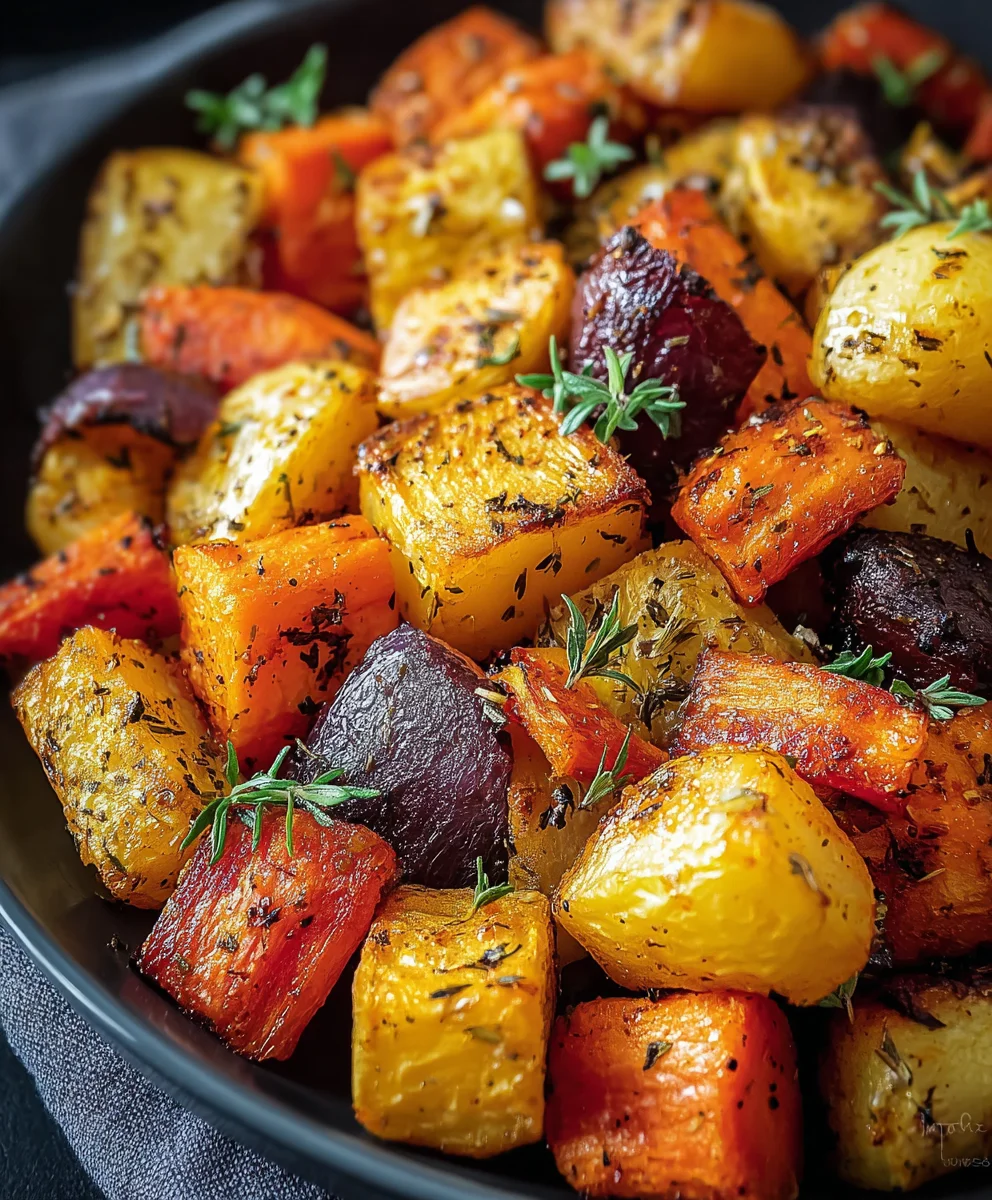
- 4 cups butternut squash, peeled, seeded, and cut into 1-inch cubes
- 3 cups carrots, peeled and cut into 1-inch cubes
- 3 cups sweet potatoes, peeled and cut into 1-inch cubes
- 2 tablespoons olive oil
- 1 tablespoon fresh thyme leaves
- 1 teaspoon garlic powder
- 1 teaspoon onion powder
- ½ teaspoon salt, or to taste
- ½ teaspoon black pepper, freshly ground, or to taste
- 1 tablespoon fresh parsley, finely chopped (optional, for garnish)
Preparing the Vegetables
The foundation of any exceptional roasted vegetable dish lies in the preparation of the vegetables themselves. For this recipe, we’re focusing on a medley of hearty root vegetables that caramelize beautifully in the oven. Start by washing all your vegetables thoroughly under cool running water to remove any dirt. Then, it’s time for the peeling and cubing. For the butternut squash, you’ll want to peel its tough outer rind with a sharp vegetable peeler or a paring knife. Cut it in half, scoop out the seeds and stringy bits with a spoon, and then proceed to cut the flesh into approximately 1-inch cubes. Uniformity in size is key here, as it ensures that all the vegetables cook at the same rate, preventing some from becoming mushy while others remain undercooked. Do the same for the carrots and sweet potatoes, ensuring they are roughly the same 1-inch cube size as the butternut squash. This consistent size also makes for a more visually appealing final dish.
Seasoning for Flavor
Once your vegetables are prepped and ready to go, it’s time to imbue them with incredible flavor. In a large mixing bowl, add all your cubed butternut squash, carrots, and sweet potatoes. Drizzle the 2 tablespoons of olive oil evenly over the vegetables. Olive oil is fantastic for roasting because it has a high smoke point and helps to create that desirable crispy exterior on the vegetables. Next, scatter the fresh thyme leaves over the oiled vegetables. Thyme is a classic pairing with root vegetables, offering a wonderfully earthy and slightly floral aroma that intensifies during roasting. For an extra layer of savory depth, sprinkle in the 1 teaspoon of garlic powder and 1 teaspoon of onion powder. These powdered seasonings distribute evenly and provide a consistent flavor throughout the dish. Finally, season generously with ½ teaspoon of salt and ½ teaspoon of freshly ground black pepper. Don’t be afraid to adjust the salt and pepper to your personal preference after tasting a cooked piece. It’s always easier to add more seasoning than to take it away. Now, using your hands or a large spoon, toss everything together until every piece of vegetable is coated with the oil and seasonings. This thorough coating ensures that each bite is packed with delicious flavor.
Roasting to Perfection
Preheating your oven is a crucial first step for achieving perfectly roasted vegetables. Set your oven temperature to 400 degrees Fahrenheit (200 degrees Celsius). A hot oven is essential for getting those lovely caramelized edges and tender interiors that make roasted vegetables so irresistible. While the oven is preheating, prepare your baking sheet. You can line a large baking sheet with parchment paper for easy cleanup, which is a lifesaver after a day of cooking. However, if you don’t have parchment paper, a lightly greased baking sheet will also work. Once the oven is up to temperature and your baking sheet is ready, carefully spread the seasoned vegetables in a single layer on the prepared baking sheet. It’s important to avoid overcrowding the pan. If your vegetables are piled too high, they will steam rather than roast, resulting in a softer texture instead of the desired crispness. If necessary, use two baking sheets to ensure a single layer. This allows the hot air to circulate freely around each vegetable piece, promoting even cooking and browning.
The Roasting Process and How to Tell They’re Done
Place the baking sheet(s) into the preheated oven. The roasting time will vary slightly depending on your oven and the size of your vegetable cubes, but a good starting point is 25 to 30 minutes. About halfway through the cooking time, around the 15-minute mark, I like to give the vegetables a good toss directly on the baking sheet. This ensures that all sides get exposed to the heat and develop that beautiful golden-brown color. You’ll notice the edges starting to soften and perhaps even char slightly – this is exactly what we’re aiming for! Continue roasting for the remaining time, or until the vegetables are tender when pierced with a fork and have developed lovely caramelized edges. The carrots should be slightly softened but still have a pleasant bite, the sweet potatoes should be easily pierced and slightly creamy, and the butternut squash should be fork-tender with a sweet, nutty flavor. Keep an eye on them in the last 10 minutes, as oven temperatures can fluctuate and smaller pieces might cook faster.
Finishing Touches and Serving
Once your roasted vegetables are perfectly cooked and have achieved that irresistible tender-yet-crisp texture with beautiful caramelization, it’s time to bring them out of the oven. Carefully remove the baking sheet from the oven. At this point, you can taste a piece and adjust the salt and pepper if you feel it needs a little more enhancement. For an optional but highly recommended final flourish, sprinkle the chopped fresh parsley over the hot roasted vegetables. The vibrant green of the parsley adds a beautiful pop of color and a fresh, herbaceous note that beautifully complements the sweet and savory flavors of the roasted vegetables. This dish is incredibly versatile and can be served as a delightful side dish alongside grilled chicken, roasted beef, fish, or even as a vegetarian main course. It’s also fantastic tossed into salads, added to grain bowls, or simply enjoyed on its own. Let them cool slightly before serving, as they will be very hot straight from the oven. The aroma alone will have everyone eager to dig in!
Conclusion:
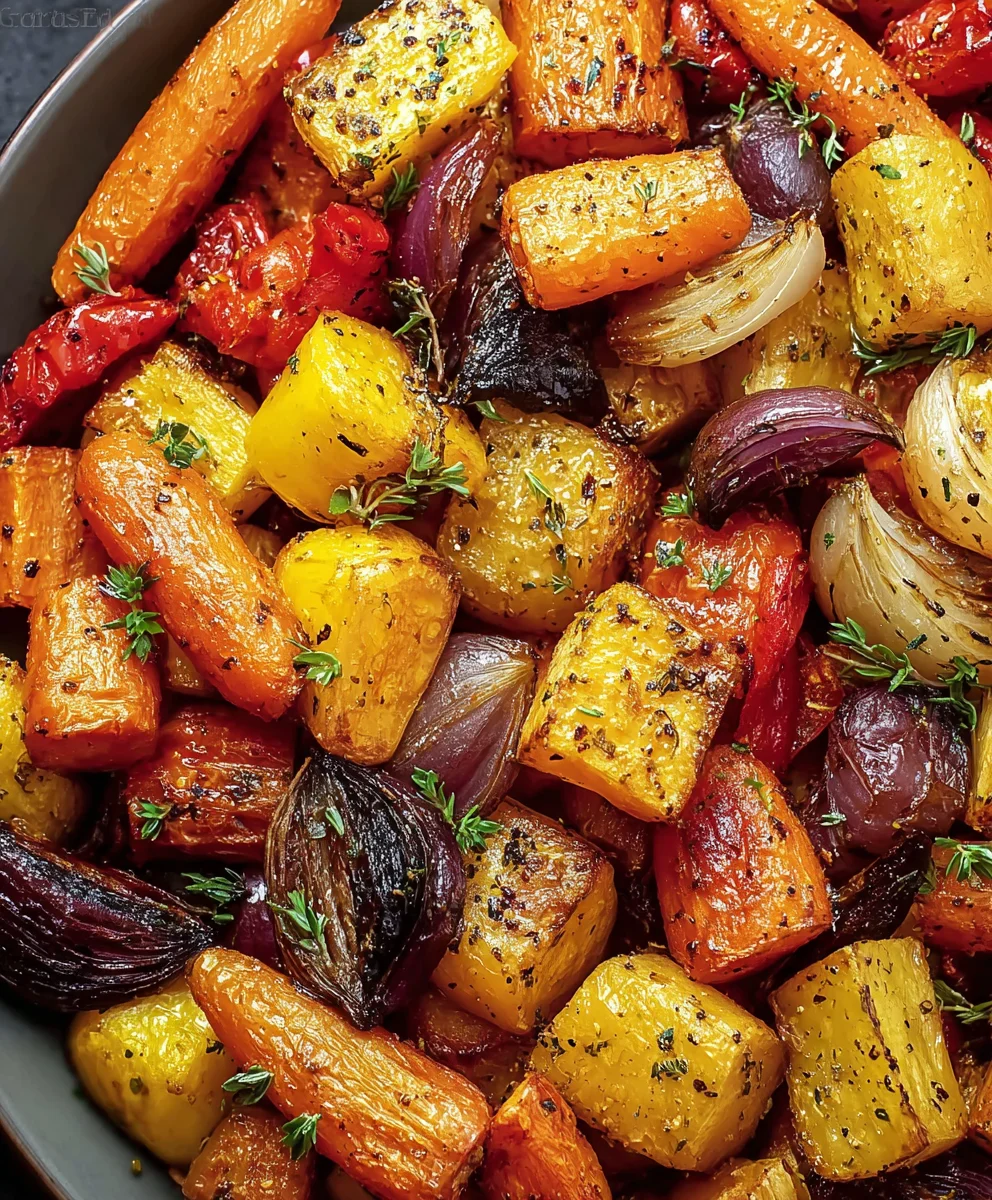
We’ve explored the simple magic of creating delicious and versatile Roasted Vegetables. This method is a fantastic way to bring out the natural sweetness and depth of flavor in a wide array of produce. The beauty of Roasted Vegetables lies in its adaptability. Feel free to mix and match your favorite seasonal ingredients, experimenting with different herbs and spices to discover new flavor profiles. Whether you’re a seasoned cook or just starting out, mastering Roasted Vegetables will undoubtedly become a go-to technique in your kitchen.
These vibrant Roasted Vegetables are perfect as a healthy side dish alongside grilled meats, fish, or poultry. They also make a wonderful addition to salads, grain bowls, or can even be enjoyed on their own as a light and satisfying meal. Don’t be afraid to get creative!
Frequently Asked Questions:
Can I roast frozen vegetables?
Yes, you can! While fresh vegetables generally yield the best texture, frozen vegetables can be roasted. Ensure they are thoroughly thawed and patted dry to prevent excess moisture from steaming them rather than roasting. This will help achieve a better crispness.
What is the best temperature for roasting vegetables?
A common and effective temperature for roasting vegetables is between 400°F and 425°F (200°C to 220°C). This higher heat promotes caramelization and helps them achieve a tender interior with delightfully crispy edges. Adjust slightly based on your oven and the specific vegetables you are using.
How can I make my roasted vegetables crispier?
To achieve crispier Roasted Vegetables, ensure you don’t overcrowd the baking sheet. Give them enough space so that hot air can circulate around each piece, promoting even browning and crisping. Also, consider tossing them with a bit more oil and ensuring they are patted dry before roasting.
Easy Roasted Vegetables Recipe
A simple and healthy side dish featuring perfectly roasted butternut squash, carrots, and sweet potatoes with aromatic herbs and spices.
Ingredients
-
4 cups butternut squash, peeled, seeded, and cut into 1-inch cubes
-
3 cups carrots, peeled and cut into 1-inch cubes
-
3 cups sweet potatoes, peeled and cut into 1-inch cubes
-
2 tablespoons olive oil
-
1 tablespoon fresh thyme leaves
-
1 teaspoon garlic powder
-
1 teaspoon onion powder
-
½ teaspoon salt, or to taste
-
½ teaspoon black pepper, freshly ground, or to taste
-
1 tablespoon fresh parsley, finely chopped (optional, for garnish)
Instructions
-
Step 1
Preheat your oven to 400°F (200°C). Wash, peel, and cut butternut squash, carrots, and sweet potatoes into uniform 1-inch cubes. -
Step 2
In a large mixing bowl, combine the cubed vegetables. Drizzle with olive oil and sprinkle with fresh thyme, garlic powder, onion powder, salt, and pepper. Toss until all vegetables are evenly coated. -
Step 3
Spread the seasoned vegetables in a single layer on a parchment-lined or lightly greased baking sheet. Avoid overcrowding to ensure proper roasting. -
Step 4
Roast for 25-30 minutes, tossing halfway through, until the vegetables are tender when pierced with a fork and have caramelized edges. -
Step 5
Remove from the oven. Taste and adjust seasoning if needed. Garnish with fresh parsley, if desired. Let cool slightly before serving.
Important Information
Nutrition Facts (Per Serving)
It is important to consider this information as approximate and not to use it as definitive health advice.
Allergy Information
Please check ingredients for potential allergens and consult a health professional if in doubt.


Leave a Comment